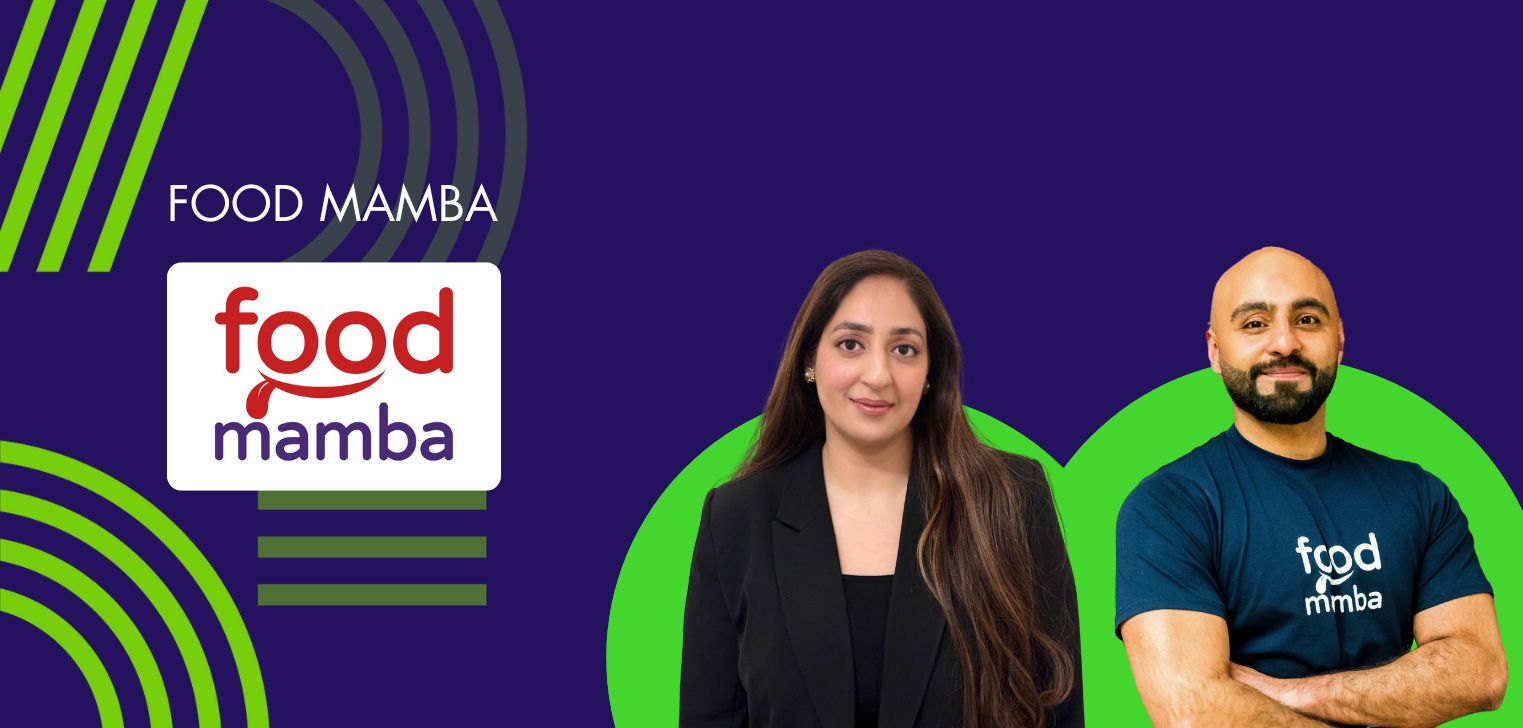
Ali Shahid and Hira Malik moved to Canada searching for a better life for their three kids, but that’s not what they found at first.
Shahid, who was born in Pakistan and raised in Saudi Arabia, said he left a cushy job in corporate marketing in Saudia Arabia because of the challenges expats faced. When they moved to Canada in 2021, however, Shahid had to start from scratch as an Uber delivery driver.
“When I went to pick up my first order from McDonald’s, I started crying,” Shahid says. “Forty or fifty days before I felt like a King, and now I am delivering food with two master’s degrees and very good work experience. It was something you never expect to happen.”
Eventually Shahid landed a job at a health-tech startup incubated at DMZ, where he got a taste for the startup life, and got to know some of the key players in the city’s restaurant sector.
He also saw how difficult it was for the incubator to organize its community lunches, which required placing large orders with a new restaurant each week, often resulting in delays, mixed-up orders and logistical nightmares.
But before his second year with the startup, in early January of 2024, Shahid returned from a family vacation to learn that the business had gone bust, and he was out of a job.
“My wife said ‘Ali, you need to start your own business,’” he says. “We saw a clear gap in the market, and we knew that we could develop something which nobody else was offering, which is streamlining operational inefficiencies in corporate catering.”
A few months later, in early March, Shahid launched Food Mamba, a tech platform that manages all the logistics for corporate clients placing large orders with local restaurants.
At first, like most startup founders, Shahid did everything on his own.
“I was the project manager, I was delivering food, I was picking up from restaurants, I was updating menus, I was putting the pricing online, everything,” he says. “I was a one-man show.”
That is until a few weeks after launch, in late April, when Shahid broke his ankle in three places, and was told by doctors that he needed to stay off it for at least six weeks. At that point he assumed the company was over before it even began.
“At that time we were doing VIP service, going to the events and making sure the food is set up on time and presented perfectly, and I couldn’t do that,” he says. “I went home, and Hira said, ‘what are we going to do for our next orders?’ and I’m like ‘I don’t know,” and she said, ‘you know what, I’m going to take over.’”
After her first delivery Malik decided to pop into an office on a different flood belonging to a major real estate management company, just as they were about to order lunch, and signed them up as a client on the spot, despite having no sales background. She has been the company’s director of business development ever since.
Earlier this year Malik joined IDEA Mississauga and YSpace’s EmpowHER accelerator program for female entrepreneurs, and later the pair joined IDEA’s six-month Step-Up startup program.
“She got a lot of great mentoring and training by IDEA Mississauga,” Shahid says. “IDEA Step-Up really helped us a lot.”
For example, the program helped the startup secure grants, enter pitch competitions, connect with industry experts and provided legal support.
Food Mamba now serves over 300 clients, with 200 vendors, a fulltime staff of five in Canada and four more in Pakistan. In early November, the company surpassed $1 million in revenue for the 2025 calendar year.
Less than two years after launching, the husband-and-wife team are expanding to event services of all kinds, including entertainment, florists, venue staffing, and more, and exploring markets outside the GTA.
“When we were struggling and wanted to be part of incubators, nobody was even willing to listen to us at that time,” Shahid says. “IDEA Mississauga were the first who not only listened, but went above and beyond, and my words fail to express how grateful I am.”
To learn more about Food Mamba, visit their website here.